The safety and reliability of reused lithium-ion traction batteries as stationary energy storage systems in private households
As the market share of electric and hybrid vehicles continues to rise, a significantly higher proportion of used vehicle batteries (traction batteries) will become available on the market for secondary use in future. Batteries with a remaining capacity of 80 per cent are no longer fitted in vehicles by manufacturers or garages. Reusing lithium-ion cells can make a significant contribution to reducing environmental impact, as the resulting increase in service life allows resources (e.g. aluminium, copper, lithium, etc.) to be utilised more effectively and reduces the demand for these materials in the production of new batteries. This helps to conserve resources. At the same time, the reuse of used batteries saves the process energy required to manufacture new battery systems, thereby making a further contribution to reducing environmental impact.
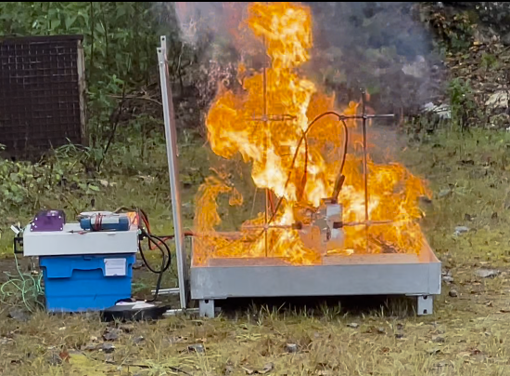
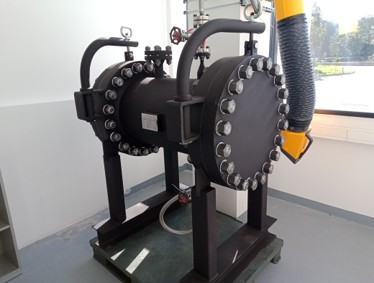
The project demonstrated how the safe and reliable reuse of traction batteries as home energy storage systems in private households can be achieved. This offers a resource-efficient way of utilising renewable energy further, whilst also saving process energy by reducing the need for newly manufactured batteries. The project examined the entire process, from procurement to the safe and reliable use of the batteries as home storage systems. To this end, a logistics concept was developed to ensure the safe transport of the batteries. Furthermore, an evaluation method with both economic and environmental considerations was devised. A database was created to organise the data that has been collected and will be generated in future; this database records parameters and key figures that are of great relevance for assessment. A key focus of the project was safety-related investigations, in which damage scenarios were analysed and potential hazards arising from thermal runaway were tested in fire trials. Furthermore, a concept for early reliability assessment was developed and modelled as a prototype. Finally, a demonstrator featuring a suitable safety concept was built and commissioned at the project partner Röwer’s premises. It has been operating safely and reliably there for approximately 1.5 years.
Further research is planned to utilise additional battery types in order to verify the developed methods. Preparations were also made for the construction of a second prototype; however, this could not be commissioned within the project timeframe. An explicit analysis of the ‘second life’ during the actual operational phase offers the opportunity to bridge further research gaps.
Key facts at a glance:
- Funding: German Federal Environmental Foundation (DBU)
- Duration: 3 years and 9 months (cost-neutral extension) (Project end: December 2023)
- Final report
- Publication
- In-house project coordinators:
- Dr Bianca Wegener
- Katja Klicker, MSc
- Monique Glockmann, MSc